From Figure to Space: Toward a Silent Memory
1 — The Figure as a Living Archive
My work initially developed around portraiture,
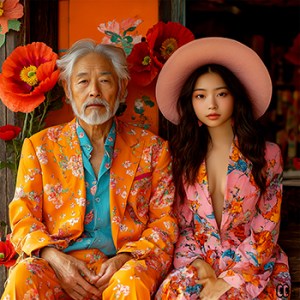
particularly in the series Portraits de Famille – Rémanences.
Frontal faces, suspended figures, recomposed identities: I use photographic codes to construct presences that have never existed.
These characters do not document reality.
They reconstruct it.
Through them, I explore artificial memory, transmission, and the construction of identity in the age of generative technologies. The image becomes a possible archive — an invented yet believable memory.
2 — The Tension of the Visible
In these portraits, colour acts as emotional intensity.
It amplifies presence, highlights fragility, and creates tension between surface and depth.
AI is not an automatism but a space of visual research.
The artistic process begins in selection, composition, retouching, and the balancing of elements.
I create images that borrow from reality in order to question how reality itself is constructed.
3 — The Gradual Disappearance
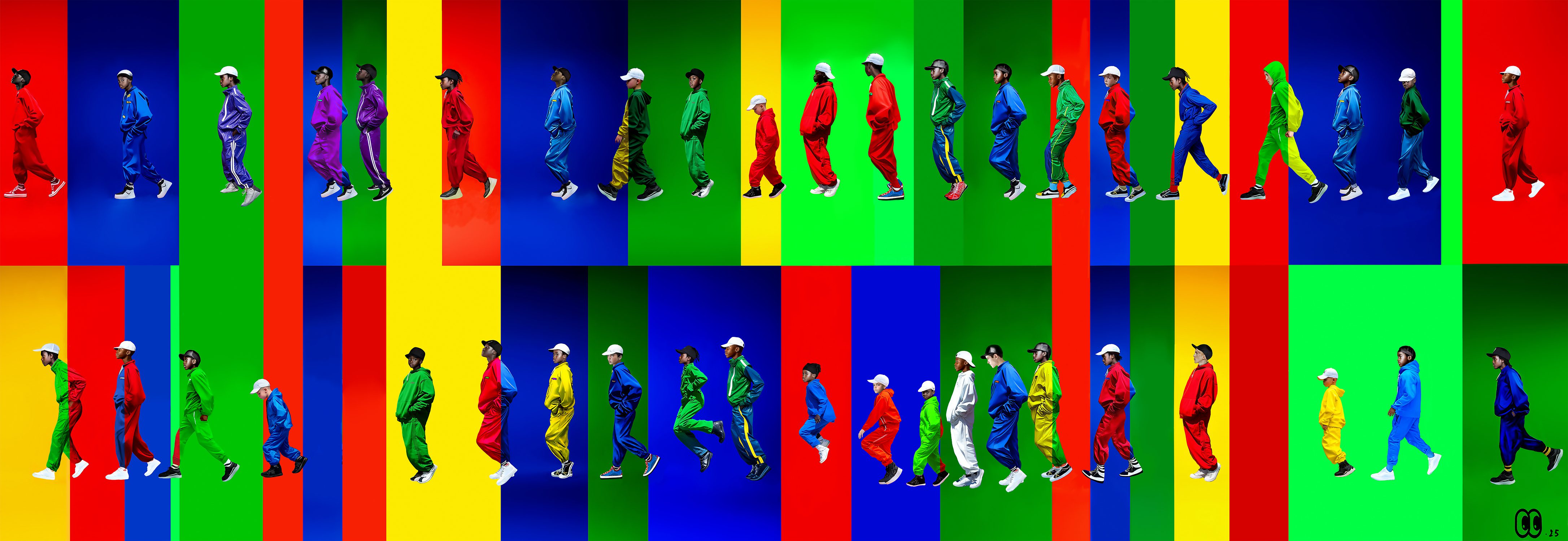
In recent years, the figure has begun to recede.
It becomes a silhouette.
Then an absence.
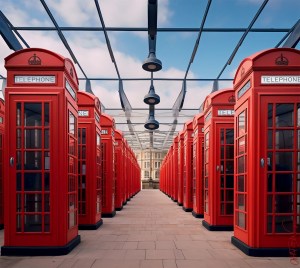
Spaces take over: port architectures and silent facades, as in the series Architecture du Silence.
This shift is not a rupture but a continuity.
Where portraiture explored intimate memory, space now investigates collective memory.
These places are charged with human traces, yet emptied of presence.
4 — Silence as Territory
Today, my work exists in this intermediate zone:
between presence and disappearance,
between individual memory and architectural memory.
Figure and space enter into dialogue.
One carries the trace of the living; the other, the trace of time.
I do not seek to represent the world, but to create suspended images — thresholds where the gaze hesitates and narrative remains open.
It is within this interval that my research now unfolds.

5 — Towards a Passage Through the Image
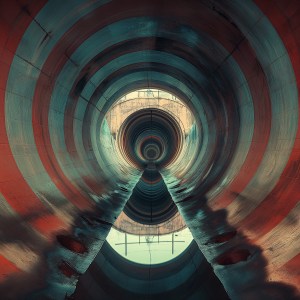
Recent research extends this shift toward space by exploring more immersive and perceptual forms.
Through series such as Zones of Latency, the image becomes a space of passage:
a structured environment where depth, repetition, and color shape a mental experience.
These environments do not represent real places.
They propose inner architectures — visual thresholds where perception begins to shift.
The viewer is no longer simply facing an image, but engaged in a traversal.
The further one moves into it, the more reference points dissolve, leading toward a liminal zone, close to emptiness.